It’s starting to feel like déjà vu. Each week I try to give commentary based on what I’m seeing firsthand, not headlines or the usual industry cheerleading. I don’t make predictions and I don’t claim it’s a good time to buy or sell because that advice is almost always wrong for someone. What matters is what is happening right now, and most of the data you read in the news is already old. This isn’t a forecast for 2026. It’s simply a look at the parallels I’m seeing, even if the reasons behind them are different.
Q4 2024 vs 2025: Different Headlines, Same Market
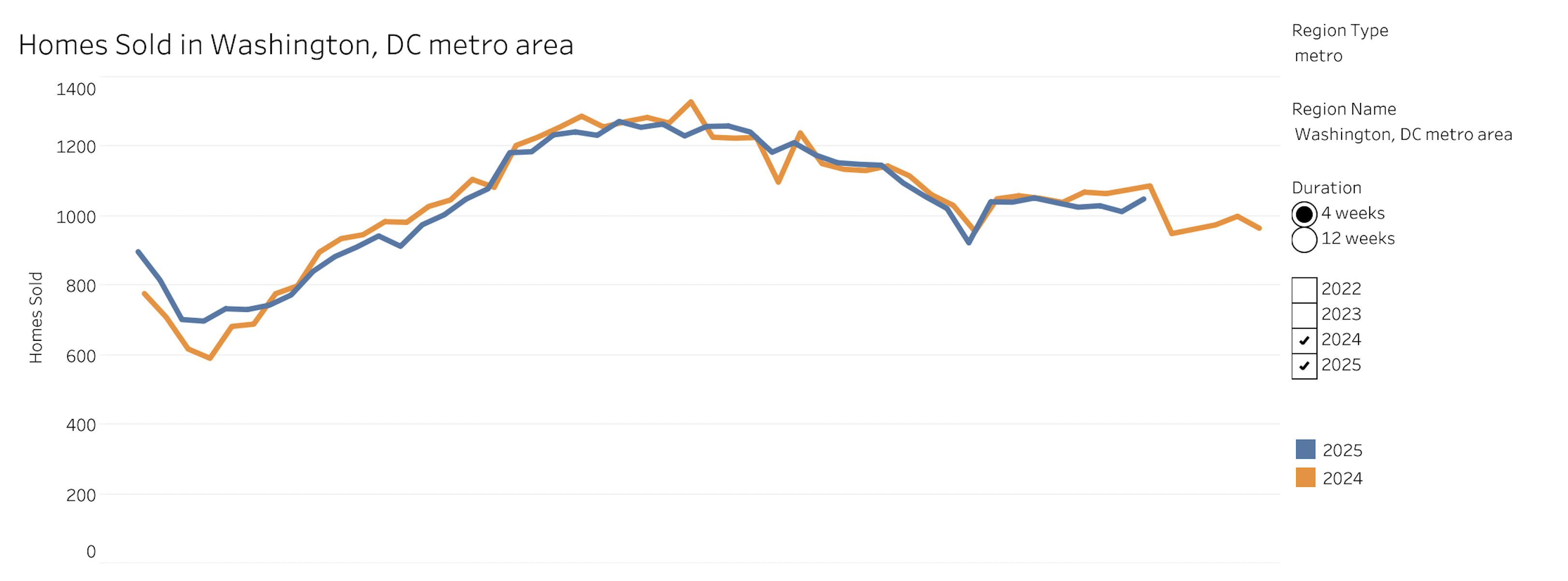 As we wrap up the fourth quarter of 2025, the similarities to last year are getting harder to ignore. They are driven by different events, but the pattern is familiar enough that it raises a question: If 2026 starts the way 2025 did, what does that mean for timing a purchase or a sale in Northern Virginia and DC over the next year?
Election years rarely have a deep impact on the housing market beyond a short pause in activity, but 2024 was messy enough to make people cautious. The amount of new listings, homes under contract, and closed sales in Q4 of 2024 and 2025 are almost identical. In both quarters the low volume that kept buyers on the sideline and sellers at bay was driven by uncertainty, volatile markets, and interest rates that refuse to go down. In 2024 the uncertainty was driven by the election and in 2025 we had the Government shut down and persistent economic concerns. The market in Q4 favored buyers, however it did not last.
That brings us back to the question of timing. If the first half of 2026 behaves anything like the first half of 2025, here is what buyers and sellers should expect.
A Look Back at Q1 2025 and Ahead to 2026
In the first quarter of 2025 the market flipped hard in favor of sellers. The intensity looked a lot like 2021, with multiple offers on every well-priced listing. A full year of pent-up demand, along with the buyers who sat out the second half of 2024, came back at the same time. People stopped waiting for lower rates or lower prices, and once the election passed without the economic collapse many feared, they moved forward.
A second group of buyers entered the mix as their 401k balances, crypto holdings, and other investments surged in the first quarter. They were done waiting as well. These two groups collided and competed for anything that came on the market.
The problem was inventory. There was not enough of it, whether due to a harsh winter, more traditional seasonal timing, or simply the new normal for our region. Anyone who sold in the first quarter of 2025 outperformed the rest of the year by a wide margin.
The Variables That Decide Q1 2026
If 2026 plays out similarly, you want to be a seller in Q1. The open question is whether that same pent-up demand still exists or if those buyers stay on the sideline and if inventory (competition) stays low.

It could also play out differently. CNBC reported that fifteen percent of sellers pulled their listings this fall after failing to sell, and most of them will be back. That alone could move the market. I’m already talking to more sellers than usual for this time of year, many of them boomers finally making their retirement move, something we barely saw last year. We are also seeing the effects of DOGE and early retirements that ran through September. My peers are reporting the same. The consensus among experienced agents is that inventory will rise in 2026, with our MLS projecting about a ten percent increase. Last year the only thing holding the market up was a lack of inventory. Once supply increased, the market shifted immediately.
Q2: When the Market Froze Overnight
In the second quarter, almost to the day, inventory finally picked up heading into spring, but it collided with a market that had completely frozen. DOGE hit, and the impact was immediate. Tens of thousands of layoffs, plus the fear that you or someone you knew could be next or replaced by AI, stopped buyers in their tracks. Tariffs, or what some called liberation day, triggered a stock market slide, and interest rates jumped at the same time. Sellers walked straight into a harsh reality where all of a sudden, buyers had options, which in return created leverage.
How to Read the Market Going Into 2026
The point in looking back at 2025 isn’t to script 2026. It’s to understand the conditions that actually moved the market and recognize when we’re seeing the same pressure build again. Inventory, demand, confidence, rates, employment. Those are the levers. Last year showed how fast they can swing sentiment, and how quickly the market can flip from advantage to disadvantage depending on which way they break.
As we move into 2026 the only honest position is to stay alert to the early signals. If demand shows up again in Q1, sellers will have the edge. If inventory floods the market, buyers will get the better hand. Both scenarios are plausible. Both depend on factors that shift faster than the headlines can keep up with.
My job isn’t to predict which path we take. It’s to tell you what’s happening as it happens so you can make the right move for your situation, not for some generic buyer or seller in a national report. Whatever 2026 brings, I’ll keep calling it in real time.

Learn about buyer rebates and reduced-cost listing options
Khalil El-Ghoul is a seasoned real estate broker actively helping sellers and buyers throughout Northern Virginia, DC, and Maryland. Known for his no-nonsense approach, Khalil combines expert market insight with honest, objective advice to help buyers and sellers navigate every type of market—from calm to chaotic. If you’re looking for clarity, strategy, and a trusted partner in real estate, he’s the one to call.

Subscribe Now
Learn the ins and outs of real estate and tips for a sales-ready home - straight to your inbox.
Follow Us